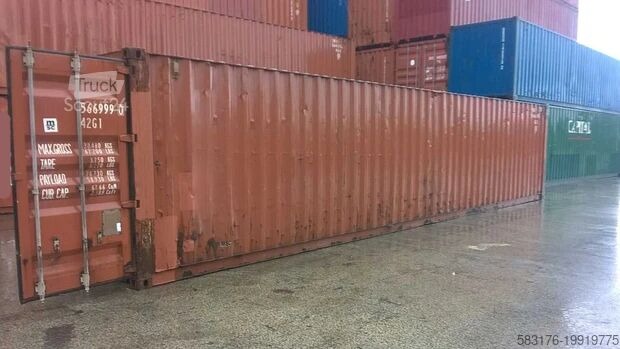
40‑Foot Shipping Container for Sale: What You Need to Know Before You Buy
When a business—or even a DIY enthusiast—needs more space, a 40‑foot container often tops the list of practical solutions. Whether you’re looking to expand your warehouse, build a pop‑up shop, create a tiny home, or simply store seasonal inventory, the right container can save you time, money, and headaches.
In this guide you’ll discover:
- The different types of 40‑ft containers on the market
- Key specifications you should compare before signing a purchase order
- How to evaluate price, condition, and additional features
- Tips for arranging delivery, installation, and ongoing maintenance
- A quick FAQ that clears up the most common doubts
By the end of the article you’ll feel confident walking into a dealership—or browsing an online marketplace—and choosing the perfect 40‑foot container for sale that matches your exact needs.
1. Why a 40‑Foot Container?
A 40‑foot container gives you roughly 2,350 cu ft (≈ 66 m³) of interior volume—almost double the space of a standard 20‑ft unit. This translates into:
| Benefit | What It Means for You |
|---|---|
| Higher cargo capacity | You can ship or store more items per trip, reducing freight costs. |
| Better price‑per‑cubic‑foot ratio | Larger units often have a lower cost per cubic foot than smaller containers. |
| Versatility | Ideal for conversion into offices, workshops, retail spaces, or even homes. |
| Standardized dimensions | Fits seamlessly on most container‑handling equipment (cranes, trucks, rail). |
| Durability | Built to withstand harsh weather, sea‑salt corrosion, and heavy loads. |
If you’re unsure whether a 40‑ft container is the right size, consider the volume of goods you need to house and whether you anticipate future growth. A margin of 10‑20 % extra space is usually a safe bet.
2. Types of 40‑Foot Containers Available for Sale
Not all containers are created equal. The following categories are the most common on the market today:
| Container Type | Typical Uses | Key Features | Typical Price Range* |
|---|---|---|---|
| Standard Dry Container (DC) | General cargo, storage, conversion projects | Corrugated steel walls, wooden or steel floor, weather‑tight doors | $2,000‑$4,500 (new) / $1,200‑$2,800 (used) |
| High‑Cube Dry Container (HC) | Voluminous cargo, mobile offices, workshops | 9 ft 6 in internal height (vs. 8 ft 6 in) | $2,500‑$5,000 (new) / $1,500‑$3,200 (used) |
| Reefer (Refrigerated) Container | Perishables, pharmaceuticals, temperature‑sensitive goods | Insulated panels, built‑in refrigeration unit (±5 °C to –30 °C) | $7,000‑$12,000 (new) / $4,000‑$8,000 (used) |
| Open‑Top Container | Oversized or irregular cargo (e.g., machinery, timber) | Removable canvas top, steel frame, extra reinforcement | $2,300‑$4,800 (new) / $1,300‑$3,000 (used) |
| Flat‑Rack Container | Heavy or oversized loads (e.g., automobiles, pipe) | Collapsible side walls, reinforced frame | $3,000‑$6,000 (new) / $2,000‑$4,500 (used) |
| Ventilated / Side‑Door Container | Agricultural products, fresh produce | Side doors with ventilation flaps, optional cooling | $2,400‑$5,200 (new) / $1,400‑$3,200 (used) |
*Prices are indicative for the U.S. market as of 2024 and vary based on condition, age, region, and optional accessories (e.g., extra doors, interior fittings).
Choosing the Right Type
- If you need simple storage or a conversion project → go for a standard dry or high‑cube container.
- If temperature control is critical → a reefer unit is non‑negotiable.
- If you’ll load oversized items → an open‑top or flat‑rack is the safest bet.
3. What to Inspect Before You Buy
Even if a container looks perfect online, a quick on‑site inspection (or a thorough photo review) can reveal hidden problems. Use this checklist as your pre‑purchase audit:
- Exterior Condition
- Rust & Corrosion – Look for pitting, especially around doors, corners, and welds.
- Dents & Deformations – Large dents may compromise structural integrity.
- Doors & Seals
- Ensure doors close tightly and locks work smoothly.
- Check rubber gaskets for cracks or drying out.
- Flooring
- Wooden floors should be free of rot, splinters, and loose boards.
- Steel floors should be level and free of weld spatter.
- Interior
- Look for water stains, mold, or mildew—signs of previous leaks.
- Verify that the interior dimensions match the specs (sometimes “as‑built” differs).
- Certification & Documentation
- CSC Plate – Shows the container’s safety certification (valid for 5 years after manufacture).
- ICSC (International Container Security Code) Plate – Required for containers moving across borders.
- Repair Records – Especially important for used units.
- Modifications
- If the seller claims custom modifications (e.g., windows, ventilation), verify that they were performed by a qualified fabricator and that structural integrity remains intact.
- Weight & Load Rating
- Check the Maximum Gross Weight (MGW) and Payload (usually 27,600 lb for a 40‑ft dry container).
Red Flags
- Rust that has penetrated the steel (you’ll see it as a thin, dark line).
- Missing or tampered plates—could indicate fraudulent origin.
- Excessive water damage inside the container (smell of mildew).
4. How to Price a 40‑Foot Container
Pricing can be broken down into three main components:
| Component | Typical Cost (USD) | How It Influences Your Decision |
|---|---|---|
| Base Unit | $1,200‑$5,000 (used) / $2,000‑$5,000 (new) | Decide between new vs. used based on budget and risk tolerance. |
| Delivery & Handling | $500‑$2,000 (depending on distance & equipment) | Long‑haul delivery adds significant cost; ask for quotes from multiple haulers. |
| Optional Extras | $200‑$3,000 (doors, insulation, lighting, HVAC) | Choose extras only if they serve a clear purpose (e.g., adding a second door for quicker loading). |
Tip: Total Cost of Ownership (TCO) matters more than the sticker price. Factor in future maintenance, insurance, and any conversion costs if you plan to repurpose the container.
5. Getting Your Container Delivered and Set Up
- Select a Reliable Supplier
- Check reviews, ask for references, and verify they have a proper ISO‑9001 or equivalent quality system.
- Arrange Transportation
- Road Transport – Most common for short‑to‑medium distances. Verify that the carrier’s trucks meet DOT regulations.
- Rail or Sea – Ideal for cross‑country or international moves; may require additional port handling fees.
- Site Preparation
- The ground must be level, compacted, and free of debris. A concrete pad (minimum 8 in thick) or a steel‑treated ground mat works best.
- If you plan to stack containers, ensure the foundation can handle the combined weight (≈ 30 tons per 40‑ft unit).
- Installation
- Cranes or forklift trucks are used to place the container.
- Verify that doors swing freely after placement; a misaligned container can damage seals.
- Post‑Delivery Inspection
- Conduct a walk‑through to confirm no damage occurred during transit.
- Record any issues in writing and have the supplier sign off on the delivery receipt.
6. Maintaining Your 40‑Foot Container
Even the toughest steel containers need routine care. Follow this simple maintenance schedule:
| Frequency | Tasks |
|---|---|
| Monthly | Inspect doors for rust, lubricate hinges and locks, check for water ingress after rain. |
| Quarterly | Clean interior, remove debris from gutters (if present), tighten any loose bolts. |
| Annually | Apply a rust‑inhibiting primer and topcoat to any exposed steel, service the reefer unit (if applicable), re‑certify CSC plate if nearing expiration. |
| Every 5 Years | Full structural audit—consider a professional inspection to verify compliance with ISO standards. |
A well‑maintained container can serve you for 30‑40 years with minimal degradation.
7. Frequently Asked Questions (FAQ)
| Question | Answer |
|---|---|
| Can I buy a used container and still get a CSC plate? | Yes. Many reputable dealers refurbish used containers and install a fresh CSC plate after a thorough inspection. |
| What’s the difference between a ‘dry’ and a ‘high‑cube’ container? | The high‑cube offers an extra foot of interior height (9 ft 6 in vs. 8 ft 6 in) while keeping the same length and width, giving you roughly 10 % more volume. |
| Do I need a permit to place a container on my property? | It depends on local zoning laws. In many U.S. municipalities a building permit or at least a temporary use permit is required, especially if you intend to use it as an office or dwelling. |
| How do I secure a container against theft? | Use high‑security padlocks, consider installing a GPS tracking device, and keep the container in a fenced, well‑lit area. |
| Is it cheaper to buy a container outright or lease it? | Buying is generally cheaper long‑term if you plan to keep the container for more than 5 years. Leasing may be advantageous for short‑term projects or when cash flow is a concern. |
| Can I stack containers on top of each other? | Yes, but only if the bottom unit is rated for double‑stacking (usually indicated on the CSC plate). Ensure the ground can support the combined load. |
| What are the environmental benefits of using shipping containers? | They promote up‑cycling of steel, reduce the need for new building materials, and have a lower carbon footprint compared to constructing a new building from scratch. |
| Do containers come with insulation? | Standard dry containers have only minimal insulation (the steel itself). For temperature‑controlled or habitation purposes, you’ll need to add foam board, spray foam, or panel insulation yourself or purchase a pre‑insulated model. |
| How can I finance a container purchase? | Options include equipment loans, leasing programs, or even green financing if you plan an eco‑friendly conversion. Many suppliers partner with financial institutions to offer flexible terms. |
8. Quick Decision Checklist
Before you click “Buy Now,” run through this short list:
- Define Your Use‑Case – Storage, shipping, or conversion?
- Select Container Type – Dry, high‑cube, reefer, etc.
- Set a Budget – Include base price, delivery, and optional extras.
- Inspect Condition – Follow the pre‑purchase checklist.
- Confirm Legal Requirements – Permits, CSC/ICSC plates, zoning.
- Arrange Logistics – Delivery method, site prep, installation crew.
- Plan Maintenance – Schedule regular checks and rust protection.
If you can answer “yes” to each point, you’re ready to make an informed purchase.
9. Final Thoughts
A 40‑foot container for sale is more than just a metal box; it’s a versatile asset that can streamline your supply chain, protect valuable inventory, or become the foundation of a creative project. By understanding the different types, checking the condition, and accounting for all associated costs, you empower yourself to choose a container that offers maximum value and long‑term durability.
Remember: the cheapest price isn’t always the best deal. Focus on the total cost of ownership, the quality of the supplier, and the future adaptability of the container. With these considerations in mind, you’ll be able to walk away from your purchase confident that you’ve secured a reliable, sturdy, and cost‑effective solution for the years ahead.
Happy hunting, and may your new 40‑foot container serve you well!