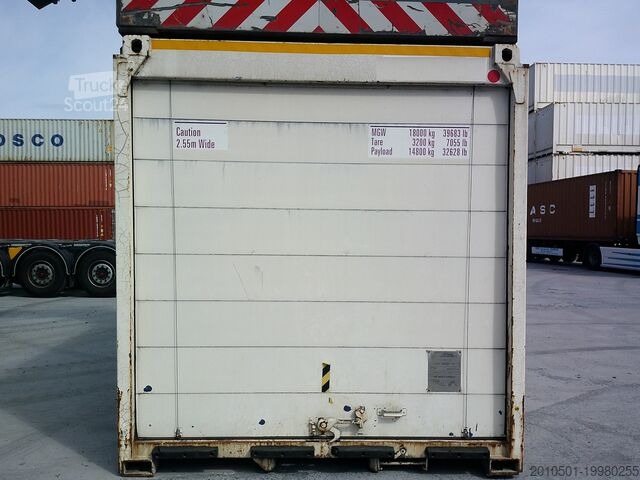
The Complete Guide to Container Transport: What You Need to Know
Whether you’re moving a handful of pallets for a quick shipment or managing a global supply‑chain network, containers are the workhorses that keep goods moving efficiently across continents. In this guide you’ll get a step‑by‑step look at how container transport works, the choices you have, the costs involved, and the best practices that will help you avoid common pitfalls.
Tip: Keep this page bookmarked. It’s packed with tables, checklists, and a FAQ you can refer back to whenever you plan a new shipment.
1. Why Containers Are the Backbone of Modern Logistics
Containers give you three core advantages:
| Benefit | What It Means for You | Why It Matters |
|---|---|---|
| Standardization | You can load a container in Shanghai and unload it in Chicago without repacking. | Reduces handling time and damage. |
| Intermodal Compatibility | The same steel box can travel by ship, rail, or truck. | Flexibility to choose the cheapest or fastest route. |
| Security & Traceability | Containers are sealed, tracked with GPS, and recorded in electronic manifests. | Minimises theft, loss, and customs delays. |
These attributes have turned containerisation into the global lingua franca of freight. If you understand how to leverage them, you can cut costs, improve delivery reliability, and boost customer satisfaction.
2. The Main Types of Shipping Containers
Most shipments use one of the standard ISO‑approved containers. Below is a quick reference that helps you decide which size and design fits your cargo.
| Container Type | External Dimensions (L×W×H) | Typical Payload (kg) | Best For |
|---|---|---|---|
| 20‑foot Dry (20′) | 6.06 m × 2.44 m × 2.59 m | 28,000 | Small to medium pallet loads, electronics, apparel |
| 40‑foot Dry (40′) | 12.19 m × 2.44 m × 2.59 m | 26,000 | Full‑truck‑load equivalents, bulk boxes, furniture |
| 40‑foot High‑Cube (40′ HC) | 12.19 m × 2.44 m × 2.90 m | 26,000 | Light but voluminous goods (e.g., toys, bottled drinks) |
| 45‑foot High‑Cube (45′ HC) | 13.72 m × 2.44 m × 2.90 m | 25,000 | Extra‑long items, high‑value cargo needing fewer lifts |
| Reefer (Refrigerated) | 20′, 40′, 45′ (same external dims) | 25,000‑28,000 (varies) | Perishables, pharma, fresh produce |
| Open‑Top | Same as 20′/40′ dry | 26,000‑28,000 | Over‑height cargo (machinery, timber) |
| Flat‑Rack | Same footprint, collapsible sides | 26,000‑28,000 | Heavy equipment, pipes, oversized bundles |
Pro Tip: Always check the internal cubic meters (m³) of a container, not just its external dimensions. The usable volume can be 5‑10 % lower due to wall thickness and internal fittings.
3. Choosing the Right Transport Mode
Once you know which container you need, the next decision is how it will travel. The three main legs—sea, rail, and road—can be combined into an intermodal journey. Below is a comparison that lets you weigh speed, cost, and environmental impact.
| Mode | Typical Transit Time (Port‑to‑Port) | Cost per 20‑ft Container (USD) | CO₂ Emissions (kg CO₂ per km) | Ideal Use Cases |
|---|---|---|---|---|
| Ocean Freight | 20‑45 days (depending on route) | $1,200‑$2,500 | 10‑15 | Large volumes, non‑time‑critical cargo |
| Rail | 7‑14 days (intra‑continental) | $800‑$1,500 | 5‑8 | Land‑locked destinations, high‑value goods |
| Truck (Full‑Truck‑Load) | 2‑7 days (regional) | $1,000‑$2,200 | 30‑45 | Door‑to‑door, last‑mile delivery |
| Air (Container‑on‑Aircraft) | <2 days | $5,000‑$10,000+ | 500‑800 | Urgent, perishable, high‑margin items |
Key Takeaway:
- If cost is your primary driver, combine ocean freight for the long haul with rail for inland moves.
- If speed matters, opt for a rail‑to‑truck corridor or consider air freight for high‑value, low‑volume shipments.
4. The End‑to‑End Process: From Booking to Unloading
Below is a checklist that walks you through each stage of a typical container shipment. Tick each box as you progress to stay on track.
| Stage | What You Do | Key Documents | Common Pitfalls |
|---|---|---|---|
| 1. Request a Quote | Submit cargo details (weight, dimensions, commodity) to freight forwarders. | Quote, Rate Confirmation | Not comparing at least three quotes; overlooking surcharges (e.g., BAF, CAF). |
| 2. Book the Container | Reserve a specific container type and size. | Booking Confirmation, Container Number (e.g., MSKU1234567) | Delay between booking and container arrival at your warehouse. |
| 3. Load & Seal | Load goods, seal with a high‑security seal, record seal number. | Packing List, Commercial Invoice, Packing Manifest | Over‑loading beyond payload; using damaged seals. |
| 4. Export Customs Clearance | Submit documents to the departure customs authority. | Export Declaration, Bill of Lading (BL) | Missed HS codes; incomplete documentation leading to penalties. |
| 5. Transport to Port | Move the sealed container to the departure terminal via truck/rail. | Freight Forwarder’s Delivery Order | Congestion at the terminal; missed cut‑off times. |
| 6. Ocean/Intermodal Transfer | Container is loaded onto the vessel or train. | Bill of Lading (Ocean) or Rail Waybill | Wrong container type for the cargo (e.g., dry instead of reefers). |
| 7. Import Customs Clearance | Provide arrival documents to the destination customs. | Import Declaration, BL, Certificate of Origin | Tariff classification errors; duty under‑payment. |
| 8. Final Delivery | Transport container to final consignee; unload and inspect. | Delivery Receipt, Unloading Report | Damage discovered after unloading; missing seal numbers. |
| 9. Return / Disposal | Either return the empty container to the depot or arrange for storage. | Empty Container Receipt | “Empty container fees” for containers left at the terminal beyond free‑time. |
5. Cost‑Saving Strategies You Can Implement Today
- Consolidate Shipments – Combine multiple small orders into a single container to avoid “LCL” (less than container load) fees.
- Negotiate Free‑Time Extensions – Most terminals grant 3‑5 days of free storage; negotiating an extra day can save $100‑$150 per day in demurrage.
- Use High‑Cube Containers – For low‑weight, high‑volume goods, a 40‑HC gives you ~10 % extra space without a big price jump.
- Leverage Back‑Haul Opportunities – Some carriers offer reduced rates if you can fill their empty return trips.
- Track in Real‑Time – GPS‑enabled telematics let you spot delays early and reroute if needed, avoiding costly demurrage.
6. Sustainability: Reducing the Carbon Footprint of Your Containers
The shipping industry accounts for roughly 3 % of global CO₂ emissions. As a shippers, you can influence greener practices:
| Action | Impact | Implementation Tips |
|---|---|---|
| Choose Rail Over Truck for inland moves | Cuts emissions up to 60 % per km | Partner with rail‑centric freight forwarders. |
| Opt for Low‑Sulphur Fuel (LSFO) on vessels | Reduces SOx and particulate matter | Verify carrier’s fuel compliance in the charter party. |
| Use Reusable, Empty‑Container Pools | Lowers waste and the need for new steel | Register with a container pool operator (e.g., Textainer). |
| Invest in Smart Sensors | Improves load optimization, reduces empty miles | Install IoT devices that monitor temperature, humidity, and location. |
| Carbon Offsetting | Neutralises unavoidable emissions | Purchase offsets from certified projects (e.g., REDD+, renewable energy). |
7. Real‑World Example: From Shenzhen to Los Angeles in 5 Steps
Scenario: You run a mid‑size e‑commerce brand that ships 800 kg of accessories per month.
| Step | What You Do | Why It Works |
|---|---|---|
| 1. Quote & Book a 40‑HC | You request three quotes, pick a forwarder offering a $1,850 ocean rate + $500 inland rail‑to‑truck. | Lower per‑unit cost while keeping delivery under 30 days. |
| 2. Load & Seal | Load 12 pallets, seal with a high‑security seal “XYZ‑123”. Record seal number in the packing list. | Guarantees cargo integrity and speeds up customs. |
| 3. Export Clearance | Submit the commercial invoice, packing list, and BL to Chinese customs. | Avoids export delays; B/L is issued electronically. |
| 4. Ocean Transit | Vessel departs from Yantian Port, arrives at Long Beach after 22 days. | Standard transit time for East Asia‑West Coast lane. |
| 5. Import & Final Delivery | Use the carrier’s online portal to arrange rail to the inland depot, then a truck to your warehouse. | End‑to‑end visibility; total door‑to‑door time 33 days. |
8. Frequently Asked Questions (FAQ)
Q1. Can I ship hazardous materials in a standard dry container?
A: Only if the hazardous goods are classified as “non‑dangerous” (e.g., certain chemicals with low toxicity). Most hazardous cargo requires a UN‑rated container and must follow the IMDG (International Maritime Dangerous Goods) Code.
Q2. What is the difference between a Bill of Lading (B/L) and a Sea Waybill?
A: A B/L is a negotiable document that serves as a receipt, a contract of carriage, and a document of title—meaning you can transfer ownership by endorsing it. A Sea Waybill is non‑negotiable; it’s mainly a receipt and contract, but the cargo is released to the named consignee without the need for a physical document.
Q3. How do I calculate the volumetric weight of my cargo?
A: Use the formula (Length × Width × Height) ÷ 6000 for air freight (in centimeters). For ocean freight, you typically use (Length × Width × Height) ÷ 1000 (in centimeters) to compare against the container’s weight limit.
Q4. What happens if my container exceeds the weight limit?
A: The carrier will issue a “Weight Discrepancy Notice.” You’ll be charged for overweight handling and may need to re‑load or split the cargo into another container. Over‑weight containers also face higher demurrage fees.
Q5. Can I track my container in real time?
A: Yes, most major carriers provide a tracking portal where you can see the container’s GPS location, status updates (e.g., “Arrived at Port”), and estimated time of arrival (ETA). Some third‑party platforms also integrate data from multiple carriers for a single dashboard.
Q6. Is it cheaper to ship a full 20‑ft container or several LCL shipments?
A: Generally, a Full Container Load (FCL) is cheaper per kilogram once you fill about 70 % of the container’s volume. Below that threshold, Less than Container Load (LCL) may be more cost‑effective due to shared space and lower handling fees.
Q7. What are “demurrage” and “detention” charges?
A: Demurrage is the fee for keeping a container at the terminal beyond the free‑time period. Detention is the charge for holding the container away from the terminal (e.g., at your warehouse) beyond the agreed return date. Both are daily rates and can add up quickly.
9. Take Action – Your Next Steps
- Audit Your Current Shipments – Identify which SKUs could be consolidated into larger containers.
- Create a Container‑Cost Model – Use the tables above to plug in your numbers (size, mode, distance) and see where you can save.
- Select a Trusted Forwarder – Look for partners who offer real‑time tracking and transparent pricing.
- Implement a SOP – Standard Operating Procedure for loading, sealing, and documentation will reduce errors and delays.
By mastering the fundamentals of container transport—understanding container types, choosing the right mode, optimizing costs, and embracing sustainability—you’ll unlock faster, cheaper, and greener supply‑chain flows.
Ready to ship smarter? Grab the checklist, run the numbers, and start planning your next container move today.
Happy shipping!