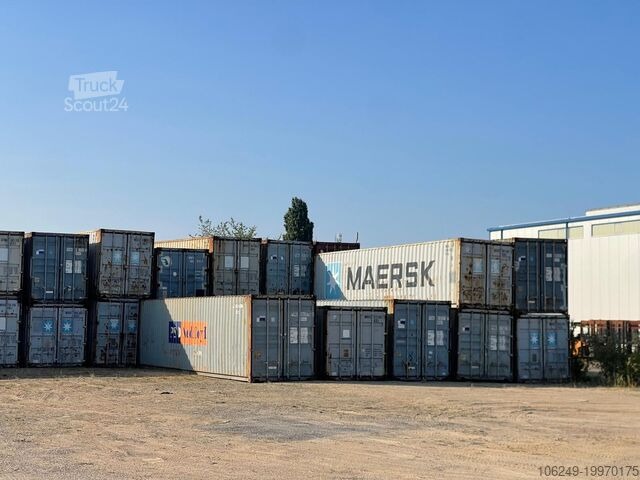
40‑Foot Containers for Sale – What You Need to Know Before You Buy
If you’re reading this, chances are you’ve already decided that a 40‑foot shipping container could solve a space‑or‑logistics problem in your business, hobby, or home. Maybe you need a portable workshop, a secure storage unit for inventory, or a cost‑effective way to ship bulk cargo across the globe. Whatever the reason, buying a 40‑foot container is a decision that deserves a little homework.
In this guide you’ll get a step‑by‑step overview of the different container types, the specs you should compare, the hidden costs that often catch first‑time buyers off guard, and a handy FAQ that answers the most common concerns. By the end, you’ll be equipped to pick the right container, negotiate a fair price, and keep your new asset in top shape for years to come.
1. Why a 40‑Foot Container?
| Benefit | How It Helps You |
|---|---|
| Maximum Volume | A standard 40‑ft dry container offers ≈ 2,390 cu ft (≈ 67 m³) of internal space – enough to hold a small car, a full inventory of pallets, or an entire home workshop. |
| Universal Compatibility | All major ports, rail yards, and trucking firms are built around 20‑ft and 40‑ft standards, making intermodal transport seamless. |
| Durability | Made from Corten steel, containers resist corrosion, denting, and weather for decades when maintained properly. |
| Security | Heavy‑duty lock points, double‑acting doors, and the ability to add CCTV or alarm systems keep contents safe. |
| Flexibility | Available in dry, high‑cube, refrigerated, open‑top, and specialized variants – you can buy a shell and customize it later. |
If any of these points line up with your needs, a 40‑foot container is likely the best “big box” on the market.
2. Types of 40‑Foot Containers
| Type | Internal Height | Door Style | Typical Use | Key Advantages |
|---|---|---|---|---|
| Standard Dry (40′) | 8 ft 6 in (2.59 m) | Double‑leaf, hinged | General cargo, storage, workshops | Lowest price, widely available |
| High‑Cube Dry (40′ HC) | 9 ft 6 in (2.90 m) | Double‑leaf, hinged | Light‑weight bulk, tall equipment | Extra 1 ft of headroom |
| Refrigerated (40′ Reefer) | 8 ft 6 in (2.59 m) | Double‑leaf, insulated | Perishables, pharmaceuticals | Built‑in temperature control |
| Open‑Top (40′ OT) | 8 ft 6 in (2.59 m) | Canvas or tarp cover | Oversized loads (machinery, timber) | Easy to load from the top |
| Flat‑Rack (40′ FR) | No side walls | N/A | Heavy machinery, vehicles | Load from any side; collapsible walls |
| Specialty (e.g., ventilated, tank, ISO‑Tank) | Varies | Varies | Specific industry needs | Custom features for niche markets |
Pro tip: If you’re unsure whether you’ll need extra height, a high‑cube container typically adds only $500‑$800 to the purchase price but can save you from costly interior modifications later.
3. Key Specs You Must Compare
| Specification | Why It Matters | Typical Range (40′) |
|---|---|---|
| External Dimensions | Determines how the container fits on a lot or in a truck | 40′ × 8′ × 8′ 6″ (L×W×H) |
| Internal Volume | Directly relates to storage capacity | 2,390 cu ft (≈ 67 m³) (dry), 2,700 cu ft (high‑cube) |
| Tare Weight | Affects payload capacity & transport costs | 8,000‑9,000 lb (≈ 3,600‑4,080 kg) |
| Maximum Gross Weight (MGW) | Legal limit for road/rail transport | 67,200 lb (≈ 30,480 kg) |
| Payload Capacity | MGW – tare weight = usable load | ≈ 58,200 lb (≈ 26,400 kg) |
| ISO Certification | Guarantees compliance with global standards | ISO 668 (size) & ISO 1496‑1 (construction) |
| Door Opening Width/Height | Determines what can be loaded through the door | 7 ft 11 in × 7 ft 10 in (≈ 2.41 m × 2.39 m) |
| Floor Grade | Load‑bearing strength of the floor panels | Typically 1‑inch thick marine plywood or steel deck; check for “28 mm floor” for heavy loads |
When you receive a quote, ask the seller for a spec sheet that lists these numbers. Any missing data is a red flag.
4. Factors to Evaluate Before You Purchase
- Condition – New vs. Used
- New: Comes with a full warranty, clean paint, and no dents. Expect to pay $3,500‑$5,500 for a standard dry unit.
- Used: Prices drop to $1,500‑$3,000 depending on age, location, and wear. Look for “CSC” (Container Safety Certificate) stamps to verify structural integrity.
- Location & Delivery Costs
- Buying from a local yard reduces inland transport fees (often $150‑$300 per container).
- If you order online from overseas, factor in shipping (port‑to‑port) (~$600‑$1,200) plus customs clearance and in‑land haulage.
- Modifications & Accessories
- Ventilation fans, shelving, electrical wiring, solar panels, or lock upgrades can add $200‑$1,500 each.
- Ask the seller whether they can pre‑install upgrades or if you’ll need a third‑party contractor.
- Regulatory Compliance
- If you’ll use the container as a habitable space (office, tiny home), confirm compliance with local building codes (e.g., fire‑rated doors, insulation R‑value).
- Warranty & After‑Sales Support
- A reputable dealer will offer a 12‑month warranty covering rust, panel deformation, and door functionality.
5. Cost Breakdown – What You’ll Actually Pay
| Item | Typical Price (USD) | Notes |
|---|---|---|
| Standard 40′ Dry (New) | $3,800 – $5,200 | Includes ISO certification |
| Standard 40′ Dry (Used, 2‑5 yr) | $2,200 – $3,500 | Must verify CSC stamp |
| High‑Cube (New) | $4,300 – $5,800 | Extra height premium |
| Reefer (New, with cooling unit) | $7,500 – $10,000 | Requires power source for unit |
| Delivery (≤ 100 mi) | $150 – $300 | Depends on terrain and permits |
| Custom Modifications | $200 – $1,500 each | Shelving, lighting, doors |
| Insurance (annual) | $120 – $250 | Based on value & location |
| Maintenance (annual) | $100 – $350 | Cleaning, rust‑proofing, inspections |
Bottom line: A well‑maintained used container can cost less than half of a brand‑new one while still delivering the same structural performance.
6. Where to Find 40‑Foot Containers for Sale
| Platform | Strengths | Typical Listings |
|---|---|---|
| Local Container Yards | Immediate inspection, low delivery cost | Dry, high‑cube, used, sometimes with CSC |
| Online Marketplaces (e.g., eBay, Boxhub, ContainerAuction.com) | Wide geographic reach, price comparison | New, used, bulk lots |
| Specialized Dealers (e.g., Mobile Mini, PacVan, ConGlobal) | Financing options, modifications in‑house | New containers, lease‑to‑own |
| Freight Forwarders & Shipping Lines | Access to surplus units from voyages | Often “one‑off” deals, may include reefers |
| Classified Ads & Local Facebook Marketplace | Hidden gems at low price | Mostly used, need careful inspection |
When you contact a seller, ask for photos of the container interior and exterior, the CSC number, and a copy of the purchase receipt. Transparency signals a trustworthy vendor.
7. Tips for Maintaining Your Container
- Inspect Quarterly – Look for rust patches, door latch wear, and water pooling.
- Clean the Exterior – Use mild detergent and a pressure washer; avoid harsh chemicals that may damage the protective coating.
- Apply Rust‑Inhibiting Paint – Re‑coat any exposed steel every 5‑7 years, especially if you operate in coastal or high‑humidity environments.
- Lubricate Hinges & Locks – Silicone‑based spray prevents freezing in cold climates.
- Ventilation – Install roof vents or small fans to avoid condensation, which can corrode interior panels.
- Floor Protection – Place rubber mats or a plywood sub‑floor if you’ll store heavy machinery to prolong the floor’s life.
8. Frequently Asked Questions (FAQ)
Q1: How long does a 40‑foot container last?
Answer: With proper maintenance, a steel container can exceed 30 years. Most structural failures are due to neglect (rust, over‑loading) rather than age alone.
Q2: Can I stack two 40‑foot containers?
Answer: Yes, standard containers are designed for stacking up to 4 units high when placed on a proper foundation or container chassis. Verify the roof’s load rating (usually 1,500 lb per square foot) if you plan to store heavy items on top.
Q3: Do I need a permit to place a container on my property?
Answer: It depends on local zoning laws. Many municipalities treat a container as a “temporary structure” and require a building permit if used as a permanent building or office. Check with your city’s planning department before installation.
Q4: What’s the difference between “new”, “new‑old stock (NOS)”, and “used”?
Answer:
- New – Fresh from the manufacturer, never shipped.
- NOS – Brand‑new container that has been stored or lightly used (e.g., for a short sea‑trial).
- Used – Previously owned, may have cargo residues, dents, or repaired panels.
Q5: How can I verify a container’s CSC (Safety Certificate) number?
Answer: Visit the International Maritime Organization (IMO) CSC verification portal and enter the 11‑digit CSC number. The system will display the container’s last inspection date, type, and any recorded defects.
Q6: Is it cheaper to buy a container and modify it yourself?
Answer: Often, yes. Buying a bare‑bones dry container for $2,300 and adding shelving, a lock, and a small solar panel can cost $500‑$800 less than purchasing a pre‑modified unit. However, DIY work may void warranties and require additional tools.
Q7: Can I finance a container purchase?
Answer: Many dealers partner with equipment‑finance companies offering 3‑5 year terms with interest rates around 6‑9 % APR. Leasing is also common for short‑term projects.
Q8: What’s the best way to transport a 40‑foot container from the port to my site?
Answer: Hire a container chassis (a specialized trailer) or a flatbed truck with appropriate permits. For distances over 200 miles, rail intermodal transport can be more cost‑effective.
9. Quick‑Start Checklist – Your 40‑Foot Container Buying Roadmap
| Step | Action | Why It Matters |
|---|---|---|
| 1 | Define the purpose (storage, office, transport) | Guides type (dry, high‑cube, reefer) |
| 2 | Set a budget (including delivery, mods, insurance) | Prevents surprise costs |
| 3 | Research suppliers (local yards vs. online) | Finds best price/condition mix |
| 4 | Request spec sheet & CSC number | Confirms compliance & structural health |
| 5 | Inspect photos or schedule a visit | Catches dents, rust, missing doors |
| 6 | Negotiate price + delivery | Leverage bulk or early‑payment discounts |
| 7 | Arrange financing/insurance | Secures cash flow & protects asset |
| 8 | Plan site preparation (foundation, permits) | Ensures safe placement and legality |
| 9 | Schedule delivery & final inspection | Verifies condition on arrival |
| 10 | Implement modifications & maintenance plan | Tailors container to your needs and prolongs life |
10. Final Thoughts
A 40‑foot container is more than a metal box; it’s a versatile, globally recognized platform that can become a warehouse, workshop, pop‑up store, or even a tiny home with the right tweaks. By understanding the different types, scrutinizing the specs, and accounting for all ancillary costs, you’ll make a purchase that pays off in durability, utility, and resale value.
Remember, the cheapest upfront price isn’t always the most economical long‑term. Prioritize condition, certification, and after‑sale support. And don’t forget to keep a regular maintenance schedule—a little rust‑prevention today saves you a lot of headaches (and dollars) tomorrow.
Now that you’re armed with the facts, go ahead and start exploring listings. Your perfect 40‑foot container is waiting—just a few clicks or a short drive away. Happy hunting!