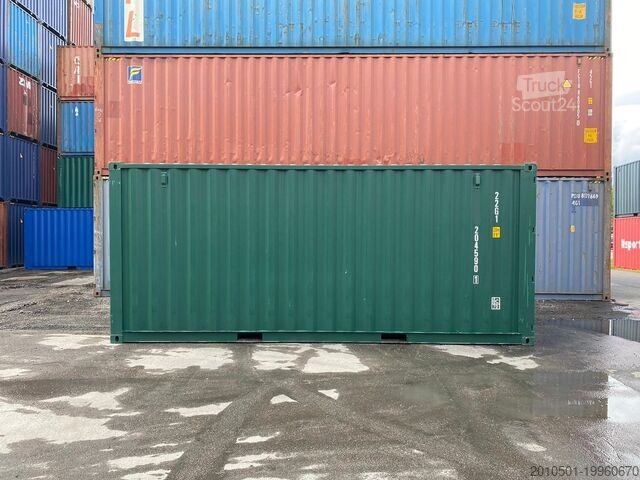
The Ultimate Guide to 30‑Foot Shipping Containers: What You Need to Know
If you’re looking for a versatile, rugged storage or transport solution that fits between a standard 20‑ft “small” box and the massive 40‑ft “masterpiece,” a 30‑foot container might be exactly what you need. In this post you’ll discover everything a savvy business owner, importer, or DIY‑enthusiast should understand before buying, renting, or repurposing a 30‑ft container.
We’ll walk through:
- The core specifications that define a 30‑ft unit
- How a 30‑ft container stacks up against its 20‑ft and 40‑ft siblings
- Real‑world use cases that make the extra 10 feet a game‑changer
- Cost considerations (buy vs. lease, new vs. used)
- Compliance, handling, and transport tips
- A quick‑reference table, a detailed comparison chart, and a handy FAQ
Grab a cup of coffee, and let’s dive in.
1. What Exactly Is a 30‑Foot Container?
A 30‑foot container is a standardized steel box built to ISO (International Organization for Standardization) specifications, just like the more common 20‑ft and 40‑ft containers. It measures 30 feet (9.14 m) in external length, with a typical width of 8 ft (2.44 m) and height of 8 ft 6 in (2.59 m) for the “standard” version, or 9 ft 6 in (2.90 m) for a “high‑cube” variant.
| Dimension (inches) | Standard (8‑ft‑6‑in) | High‑Cube (9‑ft‑6‑in) |
|---|---|---|
| Exterior Length | 360 | 360 |
| Exterior Width | 96 | 96 |
| Exterior Height | 102 | 114 |
| Interior Length | 347.5 | 347.5 |
| Interior Width | 92.5 | 92.5 |
| Interior Height | 86.5 | 98.5 |
| Internal Volume | 2,450 cu ft (69 m³) | 2,750 cu ft (78 m³) |
| Tare Weight | ≈ 5,100 lb (2,313 kg) | ≈ 5,300 lb (2,404 kg) |
| Maximum Gross Weight | 30,480 lb (13,822 kg) | 30,480 lb (13,822 kg) |
All figures are typical values; specific manufacturers may vary by a few kilograms.
Key take‑aways:
- More floor space than a 20‑ft container (≈ 50 % more).
- Less massive than a 40‑ft unit, making handling easier on a single forklift or crane.
- High‑cube option adds roughly 300 cu ft of usable space—perfect for bulky, low‑density cargo.
2. When Does a 30‑Foot Container Make Sense?
Below are the most common scenarios where you’ll find the 30‑ft size shines.
| Use Case | Why 30 ft Beats 20 ft | Why 30 ft Beats 40 ft |
|---|---|---|
| Regional freight (e.g., intra‑Europe, cross‑border e‑commerce) | Fits tighter loading docks and smaller trucks while still offering extra capacity for multi‑SKU orders | Lighter to haul on a single pallet‑truck, reducing fuel costs |
| Construction site storage | Can be parked on narrower lot spaces, still holds enough tools, prefabricated panels, and safety gear | Easier to maneuver around cranes and site traffic |
| Mobile workshops (e.g., bike repairs, pop‑up labs) | Provides a compact footprint for quick set‑up and removal | More manageable than a 40‑ft “box truck” when navigating city streets |
| Agricultural produce (e.g., grapes, olives) | Allows you to stack crates vertically without exceeding height limits of many farms | Less weight per trip, helping keep road‑tax fees low |
| Custom conversions (living quarters, office pods) | Gives you a “mid‑size” canvas that can be installed on a standard trailer without special permits | Smaller footprint means lower foundation costs for permanent installations |
In each case the sweet spot is the extra 10 ft—enough to tip the balance in favor of efficiency without the logistical penalties of a full‑size 40‑ft container.
3. Buying vs. Leasing: How to Choose the Right Financial Path
| Factor | Buying (New) | Buying (Used) | Leasing / Rental |
|---|---|---|---|
| Up‑front Cost | $4,500–$6,500 | $2,500–$4,000 | $150–$300 per month |
| Depreciation | Yes (≈ 15 % per yr) | Already depreciated | No |
| Maintenance Responsibility | Owner | Owner (may need refurbishment) | Provider |
| Flexibility | Fixed asset | Fixed asset, but you can resell | Easy to swap sizes, upgrade, or return |
| Tax Treatment | Capital expense, can be depreciated | Same as new, but lower basis | Operating expense (deductible) |
| Best For | Long‑term storage, permanent on‑site use | Start‑ups, seasonal spikes, budget constraints | Project‑based logistics, short‑term events |
Pro tip: If you anticipate using the container for more than three years and you have the space to keep it, purchasing (especially a gently used unit) usually beats leasing from a cost‑per‑year standpoint.
4. Getting the Container to Your Doorstep – Handling & Compliance
- Check Local Zoning – Some municipalities limit container height or require a permit for “temporary structures.”
- Verify Road‑Weight Limits – In the U.S., the typical maximum gross vehicle weight rating (GVWR) for a single‑axle trailer is 26,000 lb; a 30‑ft container at full load (≈ 30,480 lb) will need a dual‑axle trailer.
- Secure the Load – Use twist‑locks, wooden lashing bars, and ISO‑rated cargo straps. For high‑cube units, keep the center of gravity low to avoid sway.
- Choose the Right Transport Mode –
- Truck – Most common for domestic moves; requires a tractor‑trailer with a 40‑ft chassis (the extra length is no problem).
- Rail – Great for bulk shipments across continents; containers are loaded onto flatcars that can hold up to 40 ft units, meaning a 30‑ft unit fits comfortably.
- Ship – If you’re moving internationally, you’ll place the container on a feeder vessel. Most carriers treat 30‑ft units as “non‑standard” and will charge a small surcharge, but the difference is negligible.
5. Customizing Your 30‑Foot Container
| Modification | Typical Cost Range | Use Cases |
|---|---|---|
| Insulated Walls & Ceiling | $1,200–$2,500 | Cold‑chain, pharmaceuticals |
| Ventilation Fans + Temp Sensors | $300–$800 | Agricultural produce, workshop |
| Door Reinforcement (steel plates, extra hinges) | $200–$600 | High‑security storage |
| Electrical Wiring + LED Lighting | $500–$1,200 | Mobile office, pop‑up retail |
| Interior Shelving / Racking | $250–$900 per set | Tool storage, inventory management |
| Solar Panel Roof (2 kW) | $1,500–$2,300 | Off‑grid power for remote sites |
| Exterior Painting/Branding | $300–$700 | Marketing, corporate identity |
When you pick a modification, verify that it does not compromise the container’s structural integrity. Any alteration that changes the load‑bearing capacity (e.g., cutting large door openings) may require a re‑certification from a qualified engineer.
6. Quick Reference: 30‑Foot Container vs. 20‑Foot & 40‑Foot
| Feature | 20‑ft Standard | 30‑ft Standard | 40‑ft Standard |
|---|---|---|---|
| External Length | 20 ft (6.10 m) | 30 ft (9.14 m) | 40 ft (12.19 m) |
| Internal Volume | ~1,170 cu ft (33 m³) | ~2,450 cu ft (69 m³) | ~2,390 cu ft (68 m³) (standard) |
| Tare Weight | ~4,800 lb (2,177 kg) | ~5,100 lb (2,313 kg) | ~8,200 lb (3,720 kg) |
| Max Gross Weight | 30,480 lb (13,822 kg) | 30,480 lb (13,822 kg) | 30,480 lb (13,822 kg) |
| Typical Use | Small parcels, personal moves | Mid‑size freight, modular offices | Full‑load shipping, large equipment |
| Handling Equipment | Single‑forklift, small crane | Standard forklift, 2‑ton crane | Large crane, heavy‑duty forklift |
Note: The 30‑ft container’s volume exceeds the 40‑ft standard because the 40‑ft version’s interior length is reduced by the door thickness and structural ribs. The high‑cube 30‑ft unit even surpasses the 40‑ft standard in cubic capacity.
7. Frequently Asked Questions
Q1: Are 30‑ft containers ISO‑certified and accepted worldwide?
Yes. They meet ISO 668 (container dimensions) and ISO 1496 (container testing). While they’re less common than 20‑ft and 40‑ft units, most global carriers and ports handle them without issue.
Q2: Can I stack a 30‑ft container on top of another container?
*Only if the container is rated for stacking (usually indicated by a “twist‑lock” rating of 4 or higher). A standard 30‑ft unit can be stacked two high on a certified chassis, but always check the manufacturer’s load‑bearing chart.
Q3: How does the cost per cubic foot compare between a 30‑ft and a 40‑ft container?
For a new standard‑cube 30‑ft unit at $5,500 and a 40‑ft unit at $7,200:
- 30‑ft cost per cu ft ≈ $5,500 ÷ 2,450 ≈ $2.24
- 40‑ft cost per cu ft ≈ $7,200 ÷ 2,390 ≈ $3.01
Thus, the 30‑ft container offers a ~25 % lower cost per cubic foot.
Q4: Do I need a special permit to park a 30‑ft container on my property?
Regulations vary. In most U.S. states, a 30‑ft container is considered a temporary structure and may be placed without a building permit, as long as it’s on a non‑residential lot and does not exceed 8 ft 6 in in height (standard). Check with your local planning department for any setbacks or fire‑code requirements.
Q5: What is the typical lifespan of a steel 30‑ft container?
When properly maintained (regular cleaning, rust treatment, and roof inspection), a container can last 20–30 years. High‑cube units often have a slightly lower lifespan due to increased exposure of the roof panel.
Q6: Can I use a 30‑ft container as a tiny home?
Absolutely! Many DIY builders convert high‑cube 30‑ft units into tiny houses. Remember to:
- Install insulation and vapor barriers
- Add plumbing and electrical according to local codes
- Obtain a Certificate of Occupancy if you plan to live in it permanently
Q7: How do I calculate the weight of cargo I can load?
Use the formula:
Payload = Maximum Gross Weight – Tare Weight
For a standard 30‑ft container:
Payload = 30,480 lb – 5,100 lb = 25,380 lb (≈ 11,520 kg).
Always keep the center of gravity within the container’s safe limits (generally the middle third of the length).
8. Bottom Line – Is a 30‑Foot Container Right for You?
If you find yourself stuck between “I need more space than a 20‑ft box can give” and “I can’t afford the handling complexities of a 40‑ft unit,” the answer is a confident yes.
You’ll enjoy:
- Higher cubic efficiency (especially with the high‑cube version)
- Lower transport costs per volume compared with a 40‑ft box
- Simpler on‑site maneuverability — a single forklift or small crane can still handle it
- Flexibility to convert into workshops, pop‑up stores, or even a tiny home
Before you make a purchase, run the numbers: compare cost per cubic foot, evaluate local zoning, and decide whether a new, used, or leased unit aligns with your budget timeline.
When you’re ready, reach out to certified container suppliers, ask for ISO‑certified documentation, and request a pre‑delivery inspection. A well‑chosen 30‑foot container can become a silent workhorse that supports your operations for years to come.