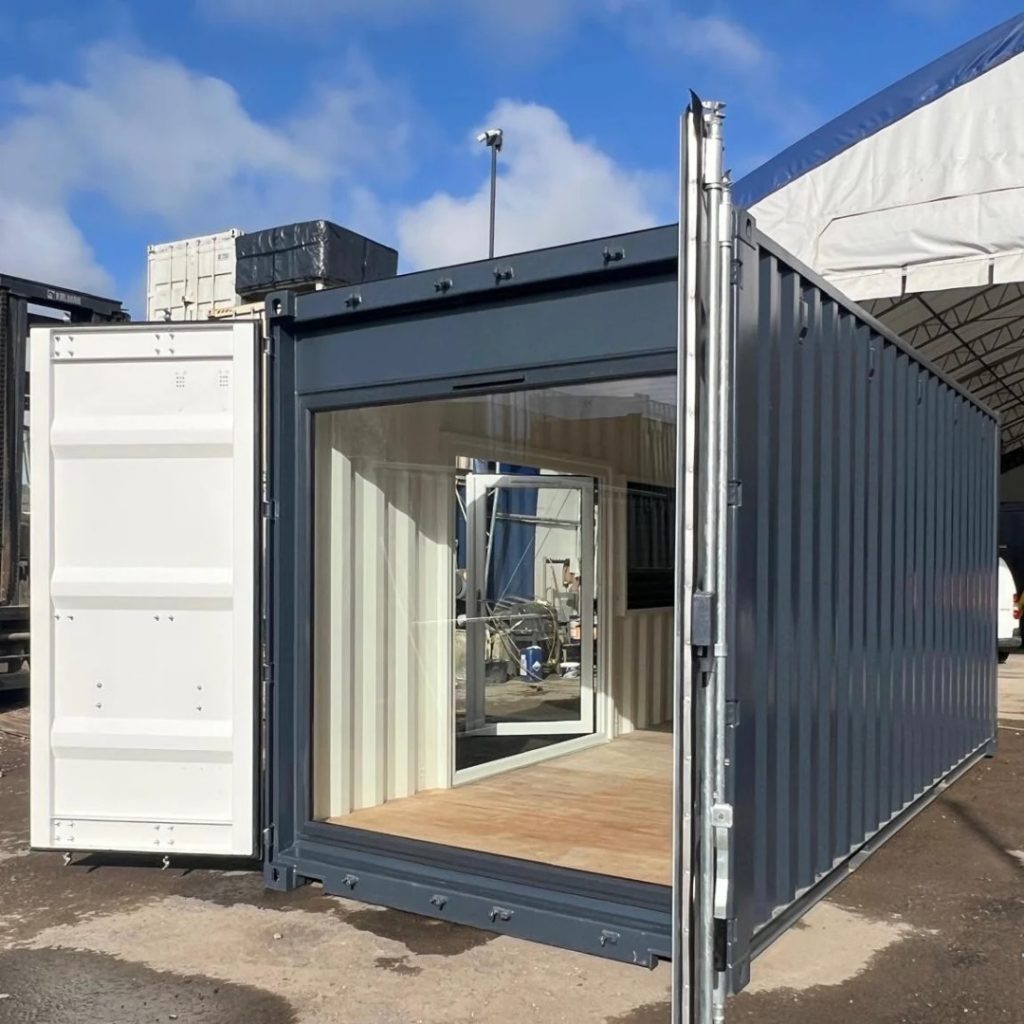
Transform Your Workspace with an Office Shipping Container
If you’ve ever dreamed of a sleek, modular office that can pop up wherever you need it, an office shipping container might be the answer you’ve been looking for. Imagine a fully‑fitted, climate‑controlled workspace that you can move, expand, or even stack like Lego bricks—all without the long‑haul permits and construction delays of traditional bricks‑and‑mortar buildings. In this post, you’ll discover how container offices work, why they’re gaining traction, and exactly how you can turn a simple steel box into a productive haven for your team.
1. What Is an Office Shipping Container?
A shipping container is a standardized steel box originally built to haul cargo across oceans, railways, and highways. When you convert one into an office, you’re essentially giving that box a new purpose: a portable, durable, and cost‑effective workspace. The conversion process can range from a simple “bare‑bones” setup—just a door, windows, and a power outlet—to a high‑end fit‑out with climate control, acoustic insulation, bespoke furniture, and smart‑office technology.
Quick note: The most common containers used for offices are the 20‑foot and 40‑foot standard ISO containers, but there are also high‑cube, refrigerated (reefer), and even multi‑story container modules for larger projects.
2. Why Choose a Container Office?
Below is a friendly list of the top reasons you might opt for a container office over a conventional build:
| ✅ Benefit | How It Helps You |
|---|---|
| Speed of deployment | A container can be delivered and installed on site in days, not months. |
| Mobility | Need to relocate the office? Simply tow the container to a new plot. |
| Scalability | Add more containers as your team grows—stack them, place them side‑by‑side, or create a “container campus.” |
| Cost efficiency | The base container costs a fraction of a brick‑and‑mortar building; conversion can be customized to fit any budget. |
| Durability | Made from corten steel, containers resist corrosion, pests, and fire. |
| Sustainability | Upcycling a used container reduces waste and gives you a recyclable structure at the end of its life. |
| Design freedom | From ultra‑minimalist to industrial chic, the exterior and interior can be painted, clad, or insulated to match your brand. |
3. Container Sizes & Basic Specs
You’ll need to pick the right container dimensions for the kind of office you envision. Here’s a quick comparison of the most common sizes:
| Container Type | External Dimensions (L × W × H) | Internal Floor Area | Approx. Interior Volume | Typical Use Cases |
|---|---|---|---|---|
| 20‑ft Standard | 20’ × 8’ × 8’6″ | 144 sq ft | 1,172 cu ft | Small private offices, meeting pods, reception desks |
| 20‑ft High Cube | 20’ × 8’ × 9’6″ | 144 sq ft | 1,280 cu ft | Same as standard but with extra headroom for standing desks |
| 40‑ft Standard | 40’ × 8’ × 8’6″ | 288 sq ft | 2,344 cu ft | Open‑plan workspaces, labs, break rooms |
| 40‑ft High Cube | 40’ × 8’ × 9’6″ | 288 sq ft | 2,560 cu ft | Larger teams, combined office + conference space |
| Reefer (20 ft) | 20’ × 8’ × 8’6″ | 144 sq ft | 1,172 cu ft | Temperature‑controlled labs, small kitchenettes |
| Modular Multi‑Story | Varies (stacked) | Scalable | Scalable | Campus‑style offices, co‑working hubs |
All dimensions are in feet unless otherwise noted.
4. Designing Your Container Office
Now that you know which size you need, let’s talk about the elements you’ll want to consider when turning that steel box into a comfortable workplace.
4.1 Insulation & Climate Control
- Insulation: Spray‑foam or rigid‑board insulation on the walls, ceiling, and floor keeps the interior temperature stable.
- HVAC: Mini‑split air‑conditioners or ductless heat pumps work well in limited spaces.
- Ventilation: Install operable windows or a mechanical ventilation system to maintain fresh air flow.
4.2 Lighting & Power
- Natural Light: Cut large, double‑glazed windows or skylights to flood the interior with daylight.
- LED Fixtures: Energy‑efficient strips and panels lower electricity costs.
- Electrical Wiring: Ensure a dedicated circuit from the site’s main panel, with surge protection for computers and servers.
4.3 Interior Layout
A typical layout might include:
- Reception/Waiting Area – A small desk and a couple of chairs.
- Open Workstations – Desks aligned along one wall, with cable management trays.
- Private Booth – A glass‑walled cubicle for calls.
- Mini‑Conference Nook – A fold‑down table and wall‑mounted whiteboard.
Feel free to rearrange or add modular furniture that can be re‑configured as your needs change.
4.4 Aesthetic Touches
- Exterior Paint: Choose a brand‑specific color or a corporate logo wrap.
- Interior Finishes: Exposed steel for an industrial vibe, or paneling and carpet for a softer look.
- Smart Features: Integrate occupancy sensors, Wi‑Fi repeaters, and IoT climate controls for a truly modern office.
5. Cost Snapshot – What to Expect
Below is a rough breakdown of the typical expenses you’ll encounter. Prices vary by region, customization level, and whether you buy a new or used container.
| Cost Item | Low‑End Estimate | Mid‑Range Estimate | High‑End Estimate |
|---|---|---|---|
| Base Container (20 ft) | $1,800 (used) | $2,500 (good condition) | $4,500 (new) |
| Base Container (40 ft) | $3,200 (used) | $5,000 (good condition) | $8,500 (new) |
| Conversion (basic) – door, windows, wiring | $3,000 | $5,500 | $8,000 |
| Conversion (premium) – insulation, HVAC, interior furniture | $8,000 | $15,000 | $25,000 |
| Site Preparation – foundation, utilities | $1,500 | $3,000 | $6,000 |
| Transport & Installation | $800 | $1,500 | $3,000 |
| Total (20 ft basic) | ≈ $9,100 | ≈ $12,800 | ≈ $20,500 |
| Total (40 ft premium) | ≈ $14,500 | ≈ $28,000 | ≈ $45,000 |
Tip: If you already own a piece of land or have a pre‑existing foundation, you can shave 10‑20 % off the total cost.
6. Step‑by‑Step Guide to Getting Your Container Office Up & Running
- Define Your Requirements – Square footage, number of workers, needed amenities.
- Select Container Size – Use the table above to match size with workflow.
- Choose a Supplier – Look for reputable vendors who offer both containers and conversion services.
- Plan the Layout – Sketch a floor plan or work with an interior designer.
- Secure Permits – Many municipalities treat containers as “accessories” but always verify local zoning rules.
- Order the Container – Decide between new, refurbished, or a used unit.
- Prepare the Site – Level the ground, pour a concrete pad or install steel footings.
- Install Utilities – Bring in electricity, water, and internet connectivity.
- Convert & Finish – Add insulation, HVAC, interior walls, flooring, and furnishings.
- Inspect & Occupy – Conduct a final walkthrough, ensure all safety standards are met, then move in!
7. Real‑World Inspiration
- Tech Startup Hub – Berlin – A cluster of three 40‑ft high‑cube containers, each outfitted with a café, coworking desks, and a podcast studio.
- Remote Field Office – Queensland, AU – A 20‑ft container turned into a weather‑proof research station, complete with solar panels and a satellite link.
- Architectural Firm – Portland, OR – A 40‑ft container with a glass façade and a rooftop garden, offering a bright, inspiring space for designers.
These examples illustrate just how adaptable container offices can be, whether you’re in a bustling city or a rugged outback.
8. Frequently Asked Questions
| Question | Answer |
|---|---|
| Do I need a special permit to place a container office? | Most jurisdictions treat containers as “temporary structures,” but you’ll still need to check local zoning, fire safety, and building codes. |
| Can I stack containers to create multi‑story offices? | Absolutely. With proper engineering (steel joists, reinforced foundations) you can stack two or more containers safely. |
| How long does a full conversion take? | A basic fit‑out can be completed in 2‑4 weeks. Premium, custom builds may take 6‑8 weeks, depending on design complexity. |
| Are containers insulated enough for extreme climates? | Standard steel walls offer little insulation. Adding spray‑foam or rigid‑board insulation and a quality HVAC system makes the space comfortable in both hot and cold regions. |
| What about fire safety? | Install fire‑rated doors, smoke detectors, and an automatic sprinkler system if required by local regulations. Steel itself is non‑combustible, but interior finishes must be fire‑tested. |
| Can I recycle or dispose of the container after use? | Yes. Containers are fully recyclable. If the structure reaches the end of its life, you can sell the steel scrap or repurpose the unit for another function. |
| Is a container office suitable for a permanent headquarters? | Many companies use them as permanent spaces, especially when they value flexibility and sustainability. With proper insulation, HVAC, and aesthetic upgrades, a container can feel just as comfortable as any conventional office. |
9. Ready to Give It a Try?
You now have a clear picture of what an office shipping container can do for your business—speed, mobility, affordability, and a dash of architectural flair. The next step is simple: pick a size, imagine your ideal layout, and start reaching out to local suppliers.
Remember, the beauty of a container office lies in its adaptability. As your team expands, you can simply add another container, re‑configure the interior, or even stack them into a mini‑tower. In a world where change is the only constant, a portable, modular workspace gives you the freedom to evolve on your own terms.
Takeaway: Whether you’re launching a startup, setting up a field lab, or looking for a quick‑install satellite office, a container office can be the smart, sustainable solution you’ve been searching for. Dive in, get creative, and watch your new “steel‑box” office become the beating heart of your next big idea.
Happy building! 🚀