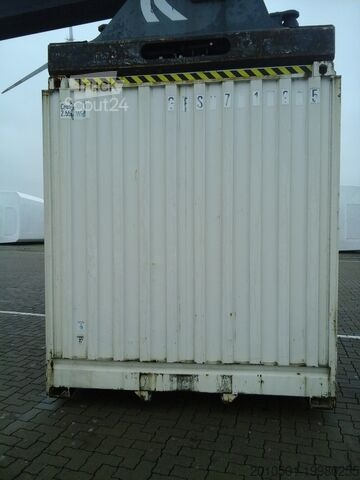
The Complete Guide to Hiring Storage Containers: What You Need to Know Before You Sign the Lease
Whether you’re tackling a home renovation, moving to a new office, or simply need a temporary space to stash seasonal gear, hiring a storage container can be a game‑changer. Unlike a traditional self‑storage unit that sits behind a fence, a container for hire comes to you, can be placed on almost any flat surface, and often offers better security at a comparable price.
In this post you’ll discover:
- The different types of containers on the market
- How to pick the right size for your project
- What to look for in a rental agreement
- Tips for loading, securing, and maintaining your container
- A quick‑reference table that breaks down dimensions, capacities, and typical weekly/monthly rates
- A handy FAQ that answers the most common concerns you’ll encounter
All of this is presented in a second‑person style, so you can picture yourself making every decision with confidence. Let’s dive in.
1. Why Hire a Storage Container Instead of Using a Traditional Self‑Storage Facility?
| Feature | Storage Container for Hire | Traditional Self‑Storage Facility |
|---|---|---|
| Location Flexibility | Delivered to your site (yard, driveway, construction site) | Fixed location; you must travel to it |
| Access Hours | 24/7 access while the container sits on your property | Usually limited to office hours or keypad access |
| Security | Steel construction, lockable doors, optional CCTV | Varies; many facilities have gated access and surveillance |
| Weather Protection | Fully sealed, weather‑proof, suitable for outdoor exposure | Typically indoors, but some units are outdoors |
| Cost per Sq ft | Comparable, sometimes cheaper for short‑term hires | Often cheaper for very long‑term (12+ months) |
| Scalability | Easy to add another container next to the first | Requires renting additional units, sometimes on different floors |
| Load/Unload Convenience | Large roll‑up doors allow forklift, pallet jack, or even a small crane | Usually only narrow doors; may need to move items through a hallway |
If you value on‑site convenience, round‑the‑clock access, and quick deployment, a storage container for hire is often the smarter choice.
2. Types of Containers You Can Hire
- Standard Steel Shipping Containers (ISO) – The workhorse of the industry. Available in 20‑ft and 40‑ft lengths, they’re built to ISO standards, making them stackable and transportable worldwide.
- Weather‑Resistant Plastic Containers – Lighter than steel, resistant to rust, and ideal for storing chemicals, foodstuffs, or items that can’t be exposed to metal.
- Cold‑Storage Containers – Insulated and equipped with a refrigeration unit; perfect for temporary food‑service or pharmaceutical needs.
- Modified‑Fit Containers – Custom interiors with shelving, lighting, or partitions for office use, equipment rooms, or showrooms.
Pro tip: Ask the provider if they can retrofit a basic steel container with shelving or a lockable interior. The added cost is usually minimal compared to buying a pre‑fitted unit.
3. How to Choose the Right Size
The most common container dimensions are listed below. Use this table to estimate the cubic footage you’ll need based on the items you plan to store.
| Container Size | Internal Length (ft) | Internal Width (ft) | Internal Height (ft) | Approx. Volume (cu ft) | Typical Uses |
|---|---|---|---|---|---|
| 20‑ft Standard | 19.4 | 7.8 | 7.9 | 1,172 | Small‑scale renovations, seasonal gear, office files |
| 40‑ft Standard | 39.5 | 7.8 | 7.9 | 2,390 | Large construction equipment, bulk furniture, inventory |
| 20‑ft High‑Cube | 19.4 | 7.8 | 8.9 | 1,310 | Taller items like ladders, pallets of boxes |
| 40‑ft High‑Cube | 39.5 | 7.8 | 8.9 | 2,672 | Heavy machinery, long‑run pallets, vehicle parts |
| 40‑ft Cold‑Storage | 38.5* | 7.7* | 7.9* | ~2,300* | Perishable goods, medical supplies |
* Dimensions may shrink slightly due to insulation and refrigeration components.
Quick Sizing Exercise
- Make an inventory – Write down each item, its approximate dimensions, and how many you have.
- Calculate total volume – Multiply length × width × height for each item, then sum them up.
- Add a 10‑15 % buffer – You’ll need extra space for aisles, padding, and future additions.
If your total comes out to 1,800 cu ft, a 40‑ft standard container (2,390 cu ft) will give you enough breathing room.
4. What to Look for in a Rental Agreement
- Delivery & Pick‑up Fees – Some companies include these in the base price; others charge per mile.
- Minimum Rental Period – Many providers require at least a 4‑week lease; short‑term rentals may incur a premium.
- Insurance Coverage – Verify whether the provider’s insurance covers loss, theft, or damage, or if you need a separate policy.
- Access Terms – Confirm you can open the container whenever you need, and whether you’ll receive a lock key, combination, or electronic keypad.
- Damage Deposit – Usually a refundable amount (e.g., $200) that covers dents or scratches; ensure you understand the inspection process.
- Renewal & Extension Options – Ask if you can extend the hire without a new contract, and at what rate.
Reading the fine print may feel tedious, but it saves you from surprise fees later.
5. Loading, Securing, and Maintaining Your Container
5.1 Loading Checklist
- Plan the layout – Place the heaviest items on the floor, lighter boxes on top.
- Use pallets – Whenever possible, stack on pallets to keep items off the floor and protect against moisture.
- Seal gaps – Use tarpaulin or moving blankets to fill empty spaces; this prevents shifting during transport.
- Label everything – Write “Top”, “Bottom”, and “Fragile” on boxes. A simple color‑coded system speeds up unpacking.
5.2 Security Tips
- Upgrade the lock – A high‑security padlock or a biometric keypad adds a layer of protection.
- Install a surveillance camera – Some rental providers offer an optional CCTV unit that can be mounted on the container.
- Ground the container – If you’re on a site with high winds, anchor the container with steel straps or a concrete block.
5.3 Maintenance While in Use
| Issue | Quick Fix | When to Call the Provider |
|---|---|---|
| Condensation forming inside | Place desiccant packs or a dehumidifier | Persistent dampness or mold |
| Door latch not closing fully | Lubricate hinges with silicone spray | Repeated latch failure |
| Rust spots on steel | Wipe with a rust remover, repaint if needed | Structural corrosion |
| Torn container side panel | Patch with metal sheeting and epoxy | Large damage compromising security |
Regular checks (once a week for a short‑term hire, bi‑weekly for longer terms) keep your belongings safe and the container in good shape.
6. Cost Comparison: How Much Should You Expect to Pay?
Below is a snapshot of average rates in the United States (prices vary by region and provider). All rates are per month, with a weekly discount noted.
| Container Type | 20‑ft Standard | 40‑ft Standard | 20‑ft High‑Cube | 40‑ft High‑Cube | 40‑ft Cold‑Storage |
|---|---|---|---|---|---|
| Weekly Rate | $120 – $150 | $190 – $230 | $135 – $170 | $260 – $310 | $400 – $480 |
| Monthly Rate (5‑week avg.) | $460 – $580 | $730 – $880 | $530 – $660 | $1,020 – $1,200 | $1,500 – $1,800 |
| Delivery (one‑time) | $50 – $100 | $80 – $150 | $60 – $110 | $100 – $170 | $150 – $250 |
| Pick‑up (one‑time) | $40 – $90 | $70 – $130 | $55 – $105 | $95 – $155 | $140 – $230 |
| Insurance (optional) | $0.75 per $1,000 value | $0.65 per $1,000 value | $0.80 per $1,000 value | $0.70 per $1,000 value | $1.00 per $1,000 value |
Example: If you hire a 40‑ft standard container for three months, the total cost (including delivery, pick‑up, and $1,000 insurance) would be roughly:
3 × $880 (monthly) = $2,640
Delivery $120 + Pick‑up $110 = $230
Insurance $1,000 × 0.65 = $650
Total ≈ $3,520
Many providers offer volume discounts for multiple containers or longer contracts, so always ask about a customized quote.
7. Real‑World Scenarios: When Hiring a Container Makes Sense
| Situation | Recommended Container | Reasoning |
|---|---|---|
| Home Renovation (kitchen & bathroom) | 20‑ft Standard | Small enough to fit in driveway; protects dust‑covered items |
| Seasonal Sports Gear for a Family of Four | 20‑ft High‑Cube | Extra height accommodates skis, snowboards, and large surfboards |
| Construction Site Storing Heavy Machinery | 40‑ft High‑Cube | Height clears tall equipment; extra floor space for pallets |
| Temporary Pop‑Up Retail Space | Modified 20‑ft (with shelving) | Turns container into a mini‑showroom; easy to relocate |
| Medical Supplies During a Pandemic Surge | 40‑ft Cold‑Storage | Maintains required temperature for vaccines and meds |
Take a glance at the table above next time you’re planning a project—if you see yourself fitting into one of these scenarios, you’re probably on the right track.
8. Frequently Asked Questions (FAQ)
Q1: How long can I keep a container on my property?
A: Most rental contracts allow a minimum of 30 days and a maximum of 12 months. Extensions are typically possible with a revised agreement and may incur a higher rate.
Q2: Do I need a permit to place a container on my driveway?
A: In many municipalities, a container that sits on a private driveway doesn’t require a building permit, but you may need a temporary occupancy or zoning permit if it blocks a public right‑of‑way. Check with your local council before the container arrives.
Q3: What happens if the container gets damaged during delivery?
A: Reputable providers perform a pre‑delivery inspection and document the container’s condition with photos. If damage occurs in transit, they typically replace or repair it at no extra cost, as long as you notify them within the agreed window (often 24–48 hours).
Q4: Can I stack containers on top of each other?
A: Yes, ISO‑standard containers are engineered for stacking up to three units high, provided they’re placed on a level, reinforced surface. However, you’ll need a crane or forklift and must follow local safety regulations.
Q5: Is insurance mandatory?
A: Not always. Some providers include basic coverage, but high‑value items should be insured separately. Review the policy limits; many businesses recommend $0.50–$1.00 per $1,000 of stored value.
Q6: How do I protect against moisture inside a steel container?
A: Use plastic sheeting or moisture‑absorbing packets at the base, and avoid storing items directly on the cold metal floor. For long‑term storage, consider a dehumidifier with a power source (solar or generator).
Q7: Can I modify a container while it’s on my site?
A: Minor modifications (adding shelving, lighting, or a ventilation fan) are usually permissible. For structural changes (cutting doors or windows) you’ll need written approval from the provider, as it may affect the ISO certification.
Q8: What payment methods are accepted?
A: Most companies accept credit cards, ACH bank transfers, and sometimes PayPal or online invoicing. Some offer a discount for upfront yearly payments.
Q9: Are there eco‑friendly container options?
A: Yes—some suppliers recycle used steel containers, and a few offer solar‑powered lighting or biodegradable pallets for internal storage. Ask your provider about their sustainability initiatives.
Q10: How do I arrange for the container to be removed after the lease ends?
A: Schedule a pick‑up at least two weeks before your contract expires. The provider will coordinate a truck, inspect the container for damages, and issue a final invoice for any additional fees.
9. Final Thoughts: Making the Most of Your Hire
Hiring a storage container is more than just renting a metal box—it’s a strategic decision that can streamline logistics, protect assets, and save you time. By:
- Selecting the right type and size,
- Understanding the costs and contractual obligations,
- Securing and maintaining the unit, and
- Leveraging the FAQ insights to avoid common pitfalls,
you’ll transform a potentially stressful storage need into a smooth, cost‑effective solution.
Ready to move forward? Start by listing every item you need to store, then request quotes from three reputable providers (don’t forget to ask about delivery windows, insurance, and any hidden fees). Compare the offers side‑by‑side, using the tables above as a benchmark, and you’ll be well on your way to a hassle‑free storage experience.
Happy storing!
If you found this guide helpful, feel free to share it with colleagues, friends, or anyone embarking on a renovation or relocation project.