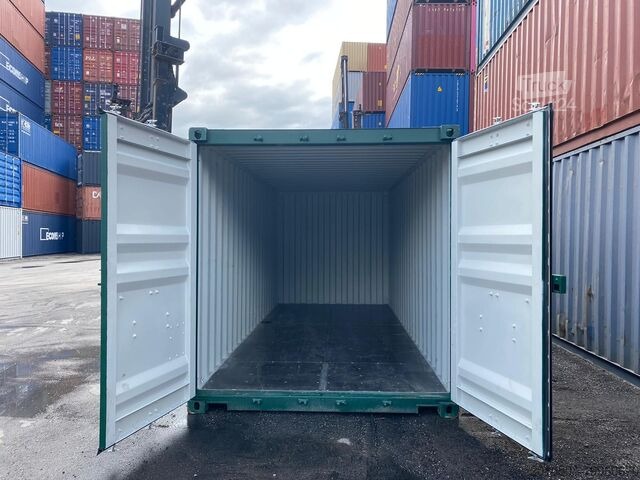
Ship Containers for Sale: The Complete Guide You Need Before You Buy
If you’re looking to buy a shipping container—whether for storage, a pop‑up shop, or a creative build‑out—this post will walk you through every decision point, compare the most common options, and answer the questions you’re likely to ask. By the end, you’ll be equipped to choose the right container, negotiate a fair price, and get it delivered without a hitch.
1. Why a Shipping Container Might Be the Right Choice for You
Before you dive into specifications, ask yourself what problem you’re trying to solve. Shipping containers have become the go‑to solution for many modern needs because they:
| Benefit | How It Helps You |
|---|---|
| Durability | Made from C‑steel, they resist dents, rust, and harsh weather—ideal for long‑term storage. |
| Portability | Standardized dimensions mean they can be moved by crane, truck, or even a trailer. |
| Security | Built‑in lock points and solid steel doors make unauthorized entry difficult. |
| Versatility | Turn them into offices, workshops, retail stalls, tiny homes, or even swimming pools. |
| Cost‑Effective | Compared with building a permanent structure, a container can be up to 70 % cheaper. |
If any of these points align with your goals, a container is likely a solid investment.
2. Types of Containers You’ll Find for Sale
Not all containers are created equal. The three most common categories are:
| Container Type | Typical Size (L × W × H) | Load Capacity | Ideal Uses |
|---|---|---|---|
| Standard Dry Container | 20‑ft (6.06 m × 2.44 m × 2.59 m) & 40‑ft (12.19 m × 2.44 m × 2.59 m) | 28–30 t (dry) | General storage, moving household goods, construction sites |
| High‑Cube Dry Container | 40‑ft HC (12.19 m × 2.44 m × 2.90 m) | 28–30 t | Projects requiring extra vertical space (e.g., workshops) |
| Refrigerated (Reefer) Container | 20‑ft & 40‑ft (same exterior dimensions) | 20–23 t | Cold‑chain logistics, food‑service pop‑ups, wine cellars |
| Open‑Top Container | 20‑ft & 40‑ft (same footprint) | 28–30 t | Loading oversized cargo, agricultural produce |
| Flat‑Rack Container | 20‑ft & 40‑ft (no side walls) | 30 t | Heavy machinery, construction steel, large equipment |
Quick tip: If you only need a simple storage solution, a standard 20‑ft dry container is often the most economical. For extra height, go for a high‑cube; for temperature control, choose a reefer.
3. Key Specifications to Compare Before Buying
When you browse “ship containers for sale,” vendors will list a handful of specs. Here’s a checklist to ensure you’re comparing apples to apples:
- Exterior Dimensions – Confirm length, width, height (especially for high‑cube vs. standard).
- Interior Volume – Measured in cubic meters (m³); important for storage capacity.
- Weight – Two figures matter: tare weight (empty container) and maximum gross weight (full load).
- Condition – New, one‑trip (used once), or used (multiple trips). Look for dents, rust, or water damage.
- Certification – ISO 668 (size) and CSC (Safety Convention) markings indicate compliance with international standards.
- Doors & Locks – Check if doors are double‑acting, type of lock (padlock, bolt, electronic).
- Ventilation – Some containers have built‑in ventilation or optional louvered panels.
- Modifications – Windows, insulation, shelving, or electrical wiring may be pre‑installed.
Comparison Table: Sample Pricing (USD) for Common Options
| Size | Condition | Approx. Price* | Tare Weight | Max Gross Weight | Typical Use |
|---|---|---|---|---|---|
| 20‑ft Standard | New | $3,200 – $4,500 | 2,300 kg | 24,000 kg | Storage, small shop |
| 20‑ft Standard | One‑Trip | $2,100 – $2,800 | 2,300 kg | 24,000 kg | Temporary site office |
| 40‑ft Standard | New | $5,500 – $7,200 | 3,800 kg | 30,480 kg | Large warehouse, home office |
| 40‑ft HC | New | $6,200 – $8,000 | 4,150 kg | 30,480 kg | Workshops, studios |
| 40‑ft Reefer | New | $9,500 – $12,500 | 4,400 kg | 29,800 kg | Cold‑storage, food trucks |
| 20‑ft Open‑Top | Used | $1,800 – $2,500 | 2,200 kg | 24,000 kg | Heavy equipment, timber |
*Prices fluctuate by region, supplier, and market demand. Always request a formal quote before committing.
4. How to Evaluate a Supplier
You could buy from a global freight forwarder, a local scrap yard, or an online marketplace. To avoid hidden pitfalls:
- Ask for a recent CSC certificate – Guarantees structural integrity.
- Request photos from multiple angles – Look for rust, dents, or water stains.
- Inquire about a warranty or return policy – Reputable sellers often offer a 30‑day inspection period.
- Check delivery logistics – Does the seller arrange crane loading, transport permits, and site placement?
- Read reviews – Look for consistent feedback on product condition and customer service.
5. Step‑by‑Step Checklist for Purchasing Your Container
- Define the purpose – Storage, office, retail, or conversion.
- Select the size & type – Refer to the tables above.
- Set a budget – Include price, delivery, and any modifications.
- Source at least three quotes – Compare specifications and terms.
- Inspect the container (or ask for a video inspection) – Verify condition.
- Finalize financing – Many sellers accept cash, bank transfer, or leasing options.
- Arrange transport – Confirm dimensions for truck or rail loading; obtain any required permits.
- Inspect on arrival – Check for damage incurred during transit.
- Install accessories – Add shelves, lighting, or HVAC if needed.
- Register the container (if required) – Some jurisdictions need a registration number for tax or land‑use purposes.
6. Frequently Asked Questions (FAQ)
| Question | Answer |
|---|---|
| Can I buy a container without a lock? | Yes, but most sellers include a standard bolt lock. You can always upgrade to a high‑security lock or a keypad system. |
| How long does delivery take? | Domestic deliveries usually arrive within 7‑14 days after payment. International shipping can take 3‑6 weeks, depending on port clearance. |
| Do I need a permit to place a container on my property? | It varies by city and zoning. Generally, a temporary placement (≤ 30 days) requires no permit, while permanent installations may need a building permit or land‑use approval. |
| Is a used container as strong as a new one? | If the container is rated “one‑trip” or “serviceable,” its structural integrity is comparable to new. However, a heavily used (multiple‑trip) container may have fatigue cracks—inspect the welds and floor panels. |
| Can I stack containers? | Yes, but only if they are designed for stacking (most ISO containers have corner castings rated for up to 9 m of stacking). Ensure the ground is level and the stacked weight does not exceed the lower container’s load rating. |
| What’s the difference between a 20‑ft and a 40‑ft container in price per cubic meter? | A 20‑ft container typically costs about $300‑$400 per m³, whereas a 40‑ft container drops to $200‑$250 per m³, making the larger size more cost‑effective for volume‑heavy needs. |
| Do containers come with insulation? | Standard dry containers have no insulation. Reefer containers have built‑in insulation and refrigeration units. For climate‑sensitive projects, consider retrofitting insulation panels. |
| Can I paint the exterior? | Absolutely, but use marine‑grade paint to maintain corrosion resistance. If the container is under warranty, check whether painting voids coverage. |
| What financing options exist? | Many sellers partner with equipment leasing companies. You can also explore short‑term business lines of credit or “buy‑now‑pay‑later” platforms that specialize in industrial assets. |
7. Real‑World Examples: How Others Have Used Their Containers
- Pop‑Up Coffee Shop – A 20‑ft high‑cube container was fitted with a counter, espresso machine, and a small outdoor patio. The owner reported a 45 % reduction in rent compared to a traditional storefront.
- Urban Garden – A 40‑ft container was converted into a hydroponic farm, complete with LED lighting and climate control, producing leafy greens for a local restaurant.
- Construction Site Office – A standard 20‑ft container served as a secure office and break room, with a simple interior partition and solar panel roof for off‑grid power.
These stories illustrate the flexibility you can achieve with a modest investment.
8. Bottom Line: Making the Right Choice
You now have a roadmap to navigate the market for ship containers for sale. By:
- Clarifying your purpose
- Comparing sizes, conditions, and prices (see the tables)
- Vetting suppliers rigorously
- Following a clear purchase checklist
you’ll avoid common pitfalls and secure a container that delivers value for years to come.
Ready to Start Shopping?
- Download the comparison sheet (click the link below) to log your favorite offers.
- Contact at least three reputable sellers and ask for a CSC certificate and recent photos.
- Schedule a site‑visit (or video walk‑through) before you sign any contract.
Happy hunting! May your new container become the sturdy foundation of your next big project.